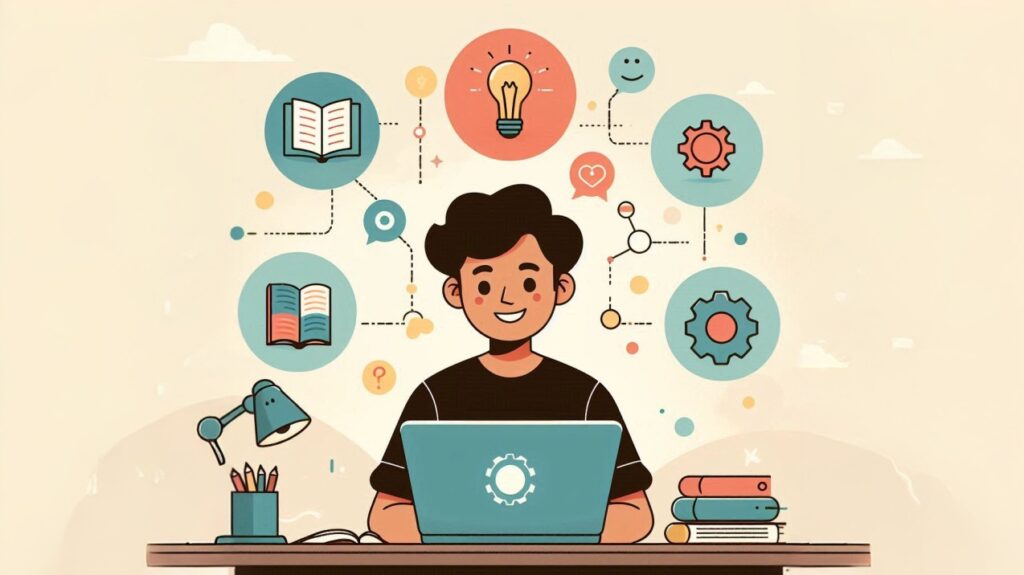

Introduction: How ChatGPT Fundamentally Rewired Our Daily Existence
Remember scrambling for that perfect email phrase? Spending hours researching a complex topic? Or staring blankly at a creative project? If those struggles feel like distant memories, you’re witnessing firsthand how ChatGPT changed human life. This isn’t just another app; it’s a paradigm shift, Which has reshaped the way we work, learn, create and even think.
Launched by OpenAI in November 2022, ChatGPT exploded onto the scene with unprecedented speed. Within two months, it amassed over 100 million users – a feat faster than TikTok or Instagram. But its impact goes far beyond viral fame. ChatGPT represents the moment powerful generative AI became accessible, usable, and undeniably useful for the masses. Let’s dive into the tangible, often profound, ways ChatGPT changed human life.
1. The Knowledge Access Revolution: Beyond Search Engines
Before ChatGPT, finding information meant sifting through search engine results, parsing dense articles, or consulting multiple sources. Now, complex concepts can be explained conversationally, tailored to your level of understanding.
- Personalized Learning: Struggling with quantum physics? Ask ChatGPT to explain it like you’re 12, or relate it to a familiar concept. Need a quick summary of the French Revolution’s causes? Done. It acts as an infinitely patient tutor, democratizing access to knowledge synthesis in a way Google never could.
- Instant Clarification & Context: Reading a technical paper or legal document? Paste a confusing paragraph and ask for a plain-English explanation. ChatGPT excels at breaking down jargon and providing instant context
- Research Accelerator: While critical evaluation remains essential, ChatGPT can rapidly generate literature reviews, suggest relevant research angles, or summarize key findings from complex papers (based on their abstracts or text you provide), significantly speeding up the initial research phase.
2. The Productivity Overhaul: Automating the Mundane
Perhaps the most immediate and widespread impact has been on productivity. ChatGPT tackles the cognitive “grunt work” that bogs us down.
- Communication on Autopilot: Drafting emails, crafting social media posts, generating meeting agendas, writing basic reports, or even polishing awkward sentences – ChatGPT handles it with startling competence.
- Coding Companion: For developers, ChatGPT is a game-changer. It can generate code snippets, debug errors, explain complex functions, translate code between languages, and even write unit tests. It doesn’t replace programmers; it amplifies their capabilities, allowing them to focus on higher-level architecture and problem-solving. Platforms like GitHub Copilot.
- Administrative Ally: Generating schedules, brainstorming project names, drafting standard operating procedures (SOPs), creating basic templates – tasks that once required switching contexts or starting from scratch are now streamlined.
3. Unleashing (and Challenging) Creativity
This is where ChatGPT gets fascinating – and controversial. It’s a powerful creative catalyst, but also raises questions about originality.
- The Ultimate Brainstorming Partner: Stuck on a story plot, marketing campaign slogan, or product design idea? ChatGPT generates dozens of variations instantly, breaking creative blocks and sparking new directions you might not have considered. It’s like having an always-available.
- Content Creation Accelerator: Blog post outlines, draft scripts, poem structures, song lyrics, even basic video storyboards – ChatGPT provides a foundational scaffold. Writers report using it to overcome “blank page syndrome,” generating initial drafts or exploring different tones and styles rapidly.
- Democratizing Creative Expression: People who never considered themselves “writers” or “artists” are using ChatGPT (and image generators like DALL-E or Midjourney, often prompted via ChatGPT) to create stories, poems, or visual concepts.
- The Originality Question: Does using AI to generate ideas or drafts diminish human creativity? Or is it simply a new tool, like a word processor or a camera? The debate rages.
3. Reshaping Work, Careers, and Skills
- Augmentation, Not (Always) Replacement: While automation anxiety is real, the initial wave shows ChatGPT primarily augmenting human roles. It handles routine tasks, freeing professionals (marketers, lawyers, analysts, customer support agents, engineers) to focus on strategy, complex problem-solving, client relationships, and tasks requiring deep empathy and judgment – areas where humans still excel. McKinsey predicts generative AI could automate up to 60-70% of employees’ time spent on certain tasks, not necessarily the jobs themselves.
- The Rise of Prompt Engineering: A new critical skill is emerging: the ability to effectively communicate with AI. Crafting clear, specific, and iterative prompts (“prompt engineering”) is essential to get the best results from ChatGPT. This skill is becoming valuable across industries.
- Shifting Skill Priorities: As AI handles more information retrieval and basic synthesis, skills like critical thinking, complex analysis, creativity, emotional intelligence, adaptability, and ethical judgment become more valuable, not less. Education systems and professional development are scrambling to adapt.
The Flip Side: Challenges and Ethical Quandaries
The ChatGPT changed human life narrative isn’t all positive. Significant challenges accompany this transformation:
- Accuracy & Hallucinations: ChatGPT can generate convincing falsehoods (“hallucinations”) or present outdated/biased information with supreme confidence. Critical evaluation and fact-checking remain essential. Blind trust is dangerous.
- Bias Amplification: Trained on vast datasets reflecting human biases, ChatGPT can perpetuate and amplify stereotypes related to race, gender, religion, and more. Mitigating this requires constant vigilance from developers and users.
- Job Displacement Fears: While augmentation is the current trend, certain roles involving repetitive content generation, basic data processing, or entry-level customer service are vulnerable to automation. Workforce transition strategies are needed.
- Over-Reliance & Skill Erosion: Could over-dependence on ChatGPT for writing or thinking erode our own critical faculties, research skills, or creative muscles? It’s a valid concern requiring mindful usage.
- Plagiarism & Academic Integrity: Educational institutions grapple with detecting AI-generated work and redefining what constitutes original student effort. The line between “tool” and “author” is blurry.
- Privacy & Security: Data entered into public AI models raises privacy concerns. Sensitive information should never be shared. Furthermore, AI tools can be exploited for sophisticated phishing or misinformation campaigns.
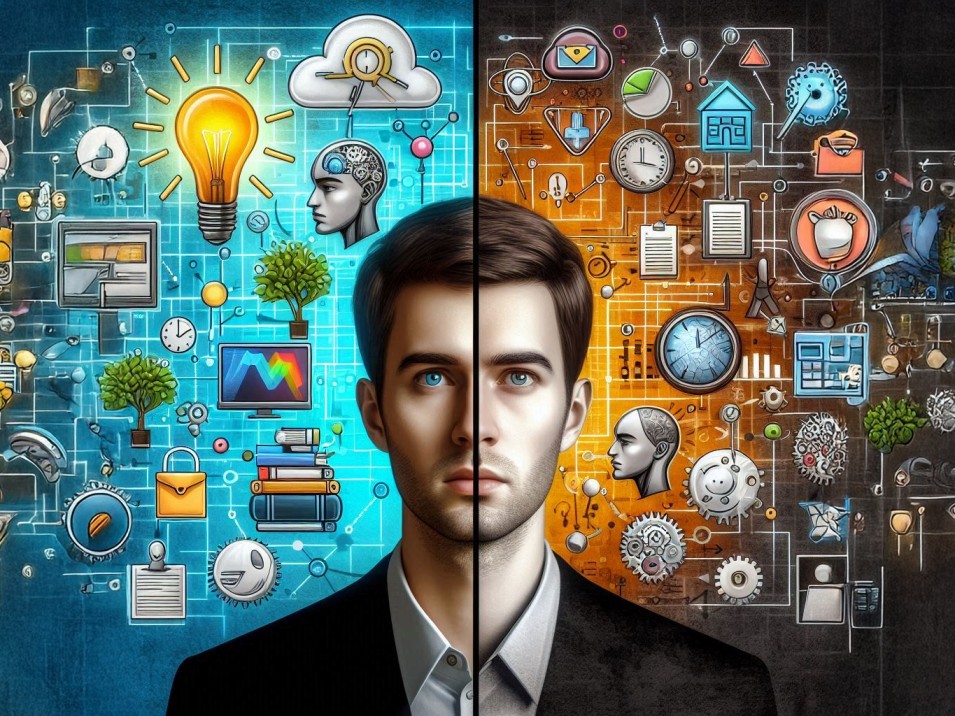
ChatGPT: Before and After – A Behavioral Shift
| Aspect of Life | Pre-ChatGPT Common Behavior | Post-ChatGPT Common Behavior | Core Change |
|---|---|---|---|
| Finding Information | Googling, sifting through links/forums | Asking direct questions, requesting summaries/explanations | Conversational Access |
| Writing & Content | Staring at blank page, manual drafting/editing | Generating drafts/ideas, refining AI output | Augmented Creation |
| Problem Solving | Manual research, trial & error, expert consultation | Brainstorming solutions with AI, debugging code | AI as Collaborator |
| Learning | Structured courses, textbooks, limited tutoring | On-demand explanations, personalized Q&A, practice | Personalized, Just-in-Time Learning |
| Daily Tasks | Manual planning (meals, travel), template search | AI-generated plans, schedules, drafts for admin tasks | Automated Cognitive Load |
| Creativity | Internal brainstorming, limited external input | Rapid ideation with AI, exploring diverse variations | Democratized & Accelerated Ideation |
The Future: Integration and Evolution
ChatGPT isn’t the end point; it’s a catalyst. We’re moving towards deeper integration:
- AI Agents: Future iterations will likely act more autonomously as “agents,” performing multi-step tasks across applications based on high-level goals (e.g., “Plan my vacation to Italy, considering my budget and preferences”).
- Specialized Models: Domain-specific AIs (for medicine, law, engineering) will offer deeper expertise beyond ChatGPT’s general knowledge.
- Multimodality: Combining text, voice, image, and video understanding/generation seamlessly (as seen in models like GPT-4o) will create even more natural and powerful interfaces.
Conclusion: A Profound and Ongoing Transformation
So, how ChatGPT changed human life? It fundamentally altered our relationship with information, creativity, and productivity. It democratized access to knowledge synthesis and creative tools, turbocharged mundane tasks, and introduced a powerful, always-available collaborator into nearly every domain. It has made us more efficient, sparked new ideas, and lowered barriers to entry for countless pursuits.
Yet, this transformation demands responsibility. We must navigate its pitfalls – combating bias, verifying information, using it ethically, and ensuring it augments rather than diminishes our uniquely human capacities for critical thought, deep empathy, and genuine creativity. ChatGPT didn’t just give us a new tool; it presented us with a mirror, reflecting both our ingenuity and our challenges
What about you? How has ChatGPT changed your daily life?
Are you using it to boost productivity, unlock creativity, learn new skills, or navigate personal challenges? Share your unique experiences and perspectives in the comments below – let’s continue this crucial conversation about our AI-augmented future!